
What is a Decentralised Cloud?
The cloud as you know it is changing. Decentralised cloud infrastructure represents a fundamental shift in how we think about computing resources, moving away from monolithic data centres toward a distributed, community-powered model.
The Traditional Cloud Model
When most people think of "the cloud," they picture massive data centres owned and operated by tech giants like Amazon, Google, and Microsoft. These facilities house thousands of servers, consume enormous amounts of energy, and are concentrated in a relatively small number of locations around the world.
While this model has enabled incredible innovation, it comes with significant drawbacks: high costs, vendor lock-in, environmental concerns, and a concentration of power in the hands of a few large corporations.
A New Approach: Decentralisation
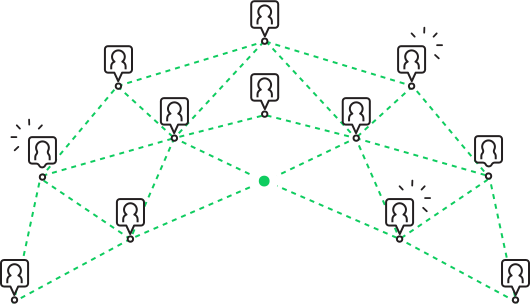
A decentralised cloud distributes computing resources across a network of independent operators rather than concentrating them in a few large facilities. Think of it like the difference between a single power plant and a network of solar panels on rooftops across a city.
At Edge, our network is powered by thousands of node operators worldwide. These operators contribute their computing resources to the network and are rewarded for their participation. This creates a more resilient, efficient, and democratic infrastructure.
Traditional vs. Decentralised
Benefits of Decentralisation
The decentralised model offers advantages that are impossible to achieve with traditional infrastructure.
Lower Latency
Data is processed closer to end users, reducing round-trip times and improving performance.
Greater Resilience
No single point of failure. If one node goes down, traffic is automatically routed to others.
Environmental Benefits
Utilises existing infrastructure and spare capacity, reducing the need for new data centres.
Community Powered
A global network of operators who are invested in the success of the platform.
How Edge's Network Works
Edge's decentralised cloud is built on a global network of nodes operated by independent participants. When you deploy a resource on Edge—whether it's a CDN distribution, a virtual machine, or a DNS zone—your workload is distributed across this network.
Our intelligent routing ensures that requests are always handled by the nearest available node, minimising latency and maximising reliability. If a node becomes unavailable, traffic is seamlessly rerouted to alternatives.
Node operators are rewarded with XE, Edge's native token, creating an economic incentive for maintaining high-quality infrastructure. This alignment of interests ensures that the network remains robust and performant.
Experience the Decentralised Cloud
Ready to see the difference? Try Edge's infrastructure with a 30-day trial.